Paris at last-18 years later


I finally reconnected with my beloved Paris after having been away for 18 long years. It has changed and so have I but I still felt at home.
In preparation for my trip, I spent weeks studying maps of neighborhoods, reviewing the metro map and bus routes, watching YouTube travel guides, and brushing up on my French by listening to French language CDs and online programs, and more.
I also created a long list of more than 30 activities-each 1-4 hours in duration-in which to engage. Also, I had a schedule of walking tours.
I kept this list with me at all times and slowly crossed off items, one at a time. There are always places I miss and I save them for the next trip.
As a result, I was well-equipped with a variety of ideas about how to spend my time.
What I was not prepared for was the 6 of 7 days of rain that I encountered, in this city known as an "open-air museum". Although the rain required me to dig deeply into my contingency-plan-bag -of -tricks, I was nonetheless able to thrive; in fact, I came, I saw, and I conquered.

Here are some of the highlights of my trip:
· My hotel was in a lively and interesting area of town. Specifically, I stayed in a small, boutique hotel located only 10 minutes from Le Marais and Place des Vosges, and only 5 minutes from the bustling Bastille area. My metro line was #8 and it was a quiet, one-line stop. Nearby, there was a plethora of choices for dining, shopping, neighborhood grocers, cafes, and boulangeries/pastisseries (bakeries). The staff at my hotel was helpful and friendly.


· I took 4 excellent walking tours conducted by smart, passionate, witty guides from a company that offers 3-6 daily tours, rain or shine. They feature more than 20-themed tours. My small group tours cost 12 euros each. Here are the brief tour descriptions, of tours I took, written by Paris-Walks.com:
THURSDAY 2:30pm The Marais Circuit 2 Stories of royalty, mistresses and intrigue in this beautiful historic neighborhood. On circuit 2 we explore the Northern side of the Marais. Elegant classical mansions with graceful courtyards and gardens, the old Jewish quarter with the picturesque rue des Rosiers, and the peaceful place des Vosges, the city’s oldest square. Meet at metro St Paul There is always an extra tour on Sunday.
 |
| The famous L'aA du Falafel |
 |
| Saint Paul |
I took this tour IN THE RAIN!


MONDAY 10.30am Ile de la Cité and Notre Dame Read the stories in the medieval sculptures, and hear how the cathedral was built. We explore the history and architecture of the Island, the old streets, the flower market, quiet gardens, secret courtyards and the poignant memorial to the deported. Meet at metro Cité.
BTW, Notre Dame turned 850 this year

BTW, Notre Dame turned 850 this year


 |
| Love Locks Bridge |
 |
| Lovers write names on lock and throw away key into Seine |

 |
| Kelly & Kim locked in love for 30 years!! |
 |
| Place Saint Michel |

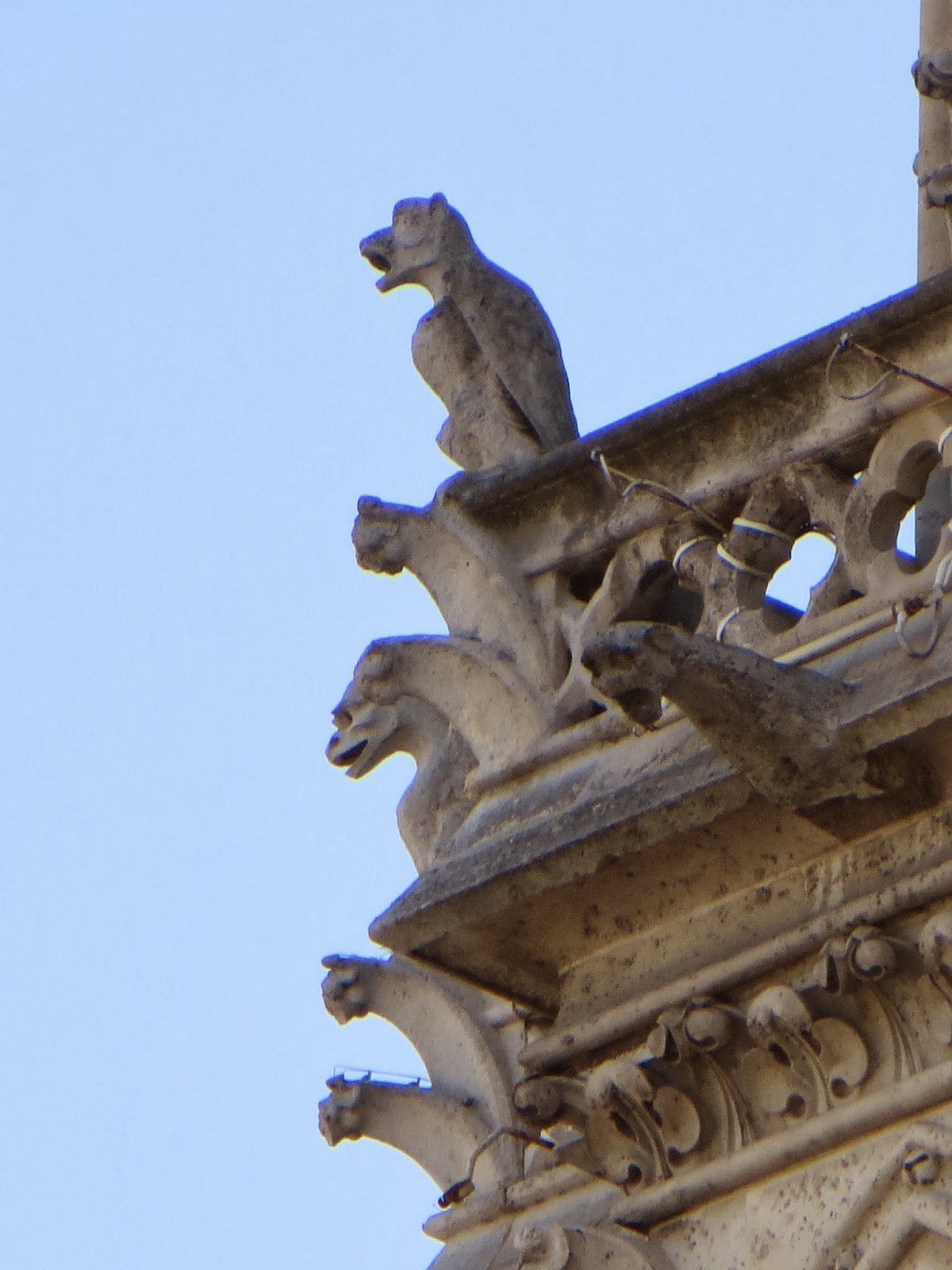 |
| Notre Dame Gargoyles |

· La Cuisine. I dined on some of my favorites including: steak frites, crepes, sandwich grecs, salade nicoise, quiche Lorraine, escargots, and fresh baguettes and pain au chocolats--hot from the oven.

.JPG)

 |
| Dinner with Susanne and Steve Zimmerman |

 |
| 16Euro formule |


 |
| Salade Nicoise |
· Strolled in some of my favorite neighborhoods and places such as Latin Quarter, Bastille area, Mouffetard, Marais, Gare St Lazarre/Haussman, and Montmartre, I did A LOT of walking, even when I used the metro for transportation.


· Visited the breathtaking and serene Jardin de Luxembourg. It was as much of a feast for the eyes as I had remembered.


· Took great photos with (and of) Paris’ monuments, both daytime and nighttime.


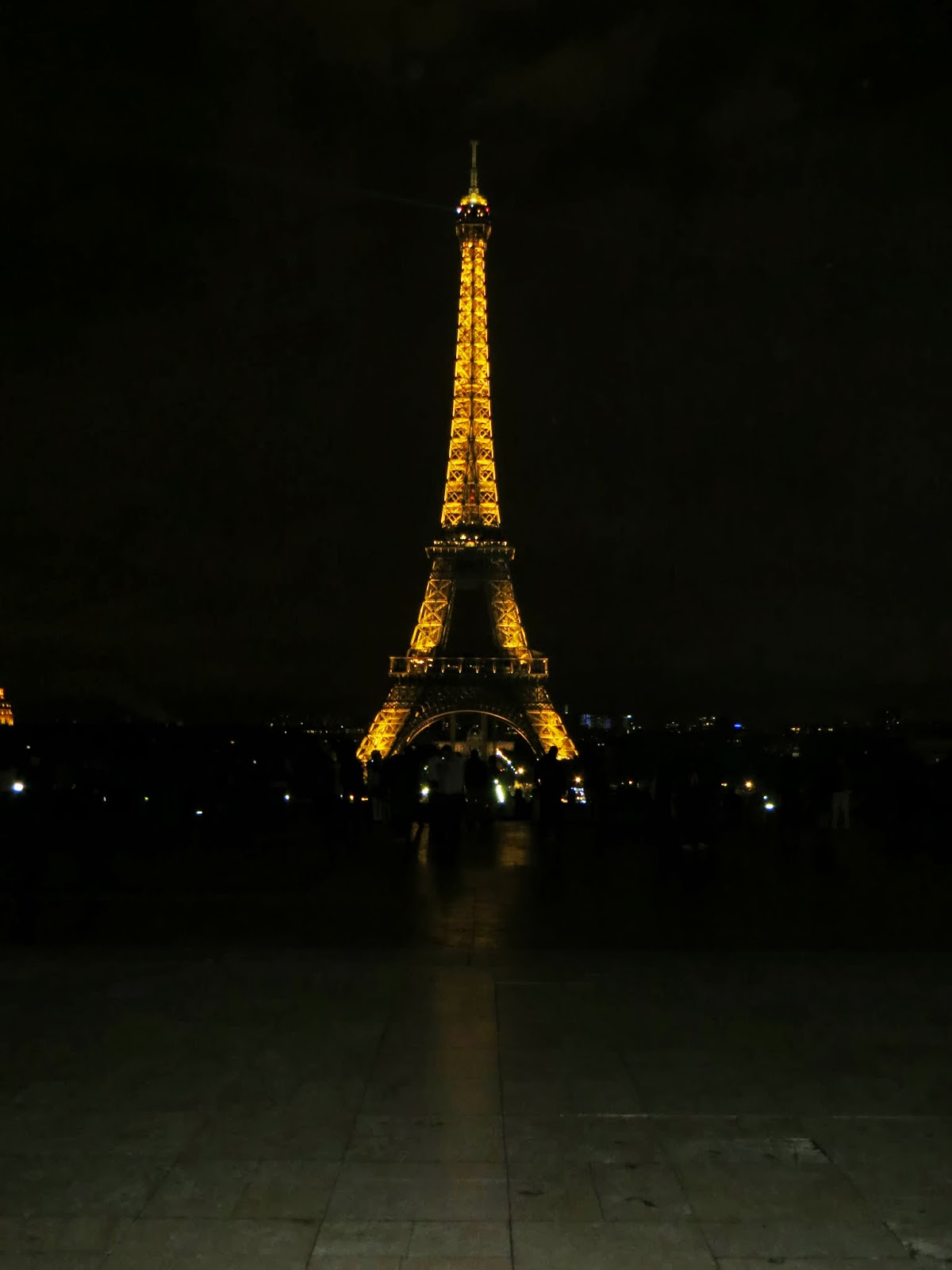


· Took the metro and bus (28 rides total) all over Paris. Yes, the metro is the most convenient and inexpensive method of traveling around the city. I also really felt “a part of” while joining the masses on the daily trudge. It is not glamorous, but it is authentic. I used my Metro App to guide me on how to connect. A book of 10 metro tickets cost 13euros30. The single ticket price is 1,70€. (September 2013)
See excellent article on how to use the Paris Metro here:


· Enjoyed long, scenic city bus rides on routes that enabled me to see famous sites such as the Opera house and famous plazas such as the Place de la Republique, all above ground. This is obviously a great alternative to taking the Metro because you are able to see all the sights along the way. Also, whenever I took the bus, it was never crowded. I could easily get two or four seats to myself and I had ample room to take out my camera and snap sights along the way. Bus line # 20 stopped right near my hotel, at my metro stop: Chemin Vert. Of note, metro tickets are valid on city buses.


· Having a meal from a pastry shop. My favorite is to go window-shopping in a pastry shop and settle on a quiche Lorraine or quiche with 3 cheeses, freshly baked, hot from the oven. These rich snacks cost under 3 euros.
 |
| Assorted quiches from my nearby boulangerie |

Visited my favorite history museum of the city of Paris, Carnavalet. This museum showcases art and artifacts of Paris with an emphasis on the Revolution and new republic periods. What I like most is the variety of artifacts from the 17th, 18th and 19th centuries including metal shop signs, guillotine miniatures, personal items (hair combs, cutlery, pistols, hair of famous Parisians), and portraiture.
· Nightly strolls through vibrant areas. Tops were lively quartiers of St Michel area, Champs-Elysées, Bastille area, and Le Marais.


Here are some observations I made from the perspective of a former resident who had been away for decades:
Smoking is prohibited indoors. The passage of anti-smoking laws in France really surprised and impressed me! I never thought I would see the day…… I noticed a difference this makes; I was free to sit indoors everywhere without being assaulted by others’ invasive, bad habits.
I was surprised to see electronic – cigarette storefronts.
Everyone is disengaging from the world around them because they are buried in activity with their smart phones – – just like everywhere else. This was especially noticeable on the metro where heads were looking down as people tapped away on their devices, oblivious to the world around them.
People spoke to me in French first in restaurants and cafés and other business establishments, and on the streets.
People often approached me and asked me for directions in French. I was flattered that a) I looked as though I knew what I was doing and b) that people presumed I was French.
I was surprised by how many French people speak English now.
Starbucks is everywhere in the tourist areas. They carry American-style desserts such as cakes, pastries and cookies and doughnuts etc.
People appear to look sad in the metro.
Blacks are still not integrated into society. When I saw Black people, they were in clusters of two or three or four. There was an occasional Black person with a group of Whites, typically young women.
There are still musicians inside the Metro cars performing and asking for money after. That has not changed.
Black is definitely a popular clothing color. I also remarked at the number of men wearing brightly colored pants such as red or orange or pink.
I am still savoring the memories of having finally reconnected with my beloved Paris!!!!!
See my arrival Day Video here:







.jpg)
.jpg)

 Posts
Posts


