Monday, May 20, 2013

Burma v Myanmar – what's in a name?


Burma v Myanmar – what's in a name?

Obama sidesteps political storm by referring to former pariah as both Burma and Myanmar
By Jason Burke of guardian.co.uk, Monday 19 November 2012

 
Burma v Myanmar – Barack Obama's use of the latter during his visit to the country was described by his hosts as 'very positive'.


What's in a name? A lot if you're a south-east Asian country emerging from decades of military dictatorship.

The British, during their time as colonial overlords, referred to Burma and to its principal city Rangoon. Early independence fighters did not see any problem with this, nor for several decades did the army generals who took power in 1962.

But, after widespread pro-democracy protests in 1988, things changed and Burma became Myanmar, or, more specifically, the Republic of the Union of Myanmar; Rangoon became Yangon.

Some countries recognised the change. Others, such as the US and the UK, did not. As both names are used in the country – Burma is more popular, Myanmar is more literary – the decision was rooted more in a desire to show disapproval for the noxious regime.

President Barack Obama had reportedly considered avoiding either name but in the end used both Burma and Myanmar on Monday during his short visit to the country.


The use of the latter pleased his hosts – the Myanmar presidential adviser, Ko Ko Hlaing, called the wording "very positive" and an "acknowledgement of Myanmar's government" – but White House officials were quick to play down the move as a "diplomatic courtesy".


The debate is almost exclusively confined to the English language. The national anthem still refers to bama pyi or the "country of Burma".

Wednesday, May 15, 2013

France rated itself the most arrogant among eight European Union nations


French Are Most Arrogant, Say French In Pew Poll Of European Union Nations


France rated itself most arrogant among eight European Union nations, according to a new survey. I find this intriguing because I would expect an arrogant people to be incapable of seeing themselves through the eyes of others.  Read on……………


Are the French really arrogant? They seem to think so.

France rated itself the most arrogant among eight European Union nations, a new survey indicates. But in the same poll, France also said it was the least arrogant -- a twist The Guardian called a "display of Gallic insouciance."

The findings in the Pew Research Center's "Stereotyping in Europe" poll were part of an overall survey of European attitudes, titled "The New Sick Man of Europe: the European Union."

Perhaps unsurprisingly, the study showed that old notions and animosities still appeared to thrive across borders in the EU's struggle for unity amid debt recovery, the Telegraph notes.


Nigel Farage, leader of the UK Independence Party, cracked to the outlet: “I am delighted that the Eurocrats have failed to crush national stereotyping, which is what makes Europe a great continent.”

Pew polled 7,646 citizens from Germany, France, Poland, the United Kingdom, the Czech Republic, Greece, Italy, and Spain.

Germany was rated most trustworthy, and it also eclipsed France as most arrogant among the majority of countries polled.

Every nation rated itself as the most compassionate, while Germany was generally considered by other countries to be the least compassionate.

More Europeans could also agree on their dislike for the current economic arrangement. The median of those with a favorable view of the European Union dropped from 60 percent to 45 percent in the past year.

The Huffington Post | By Ron Dicker Posted: 05/14/2013 6:20 pm EDT

Thursday, May 2, 2013

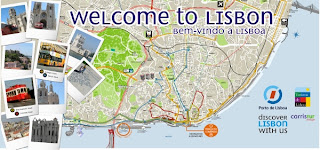
Enchanting Lisbon-The Old and the New

Enchanting Lisbon-The Old and the New


Today, I took my third visit to the city of Lisbon,( from my Celebrity Equinox cruise ship) this time from the port of Alcantra. My plan was to tour the historic center including Baixa, Chiado, Bairro Alto, and the narrow warren of cobblestone streets in the charming Alfama district.
 

Armed with maps, euros, and a sense of adventure, I eschewed Celebrity and private shore excursions to explore on my own. I began with a journey into town using public transportation. I took tram #15, for 2.8 euros, directly to the grand Praca Rossio.
My goal was to begin by getting an expert overview from a local guide, with a 3-hour walking tour. I used http://www.insidelisbon.com, for 15euros.
I love walking tours--guided tours designed to showcase the city (history, culture, cuisine, government, public transportation, arts, language and more) through the eyes of a local-- and have taken them in many cities from Buenos Aires, to Casablanca, to Tallinn, to Barcelona.
Here is the rich itinerary that our group of ten followed:
· Visit the Rossio Square, the heart of both the old and new Lisbon. (this was our meeting point at 10AM.


· Learn how the old city of Lisbon was destroyedin the 18th century and then totally rebuilt to become the city of today.


· Learn about the favorite liqueur of many Portuguese and a typical drink in Lisbon - Ginjinha;


· Take a look at the Obelisk in the middle of Restauradores Square. It commemorates the Restoration of Portugal’s independence from Spain in 1640, after sixty years of Spanish rule.


· Marvel at the intricate Neo-Manueline architecture of theRossio Central Station.


· Learn about the Carnation Revolution of 1974 as you visit the beautiful Carmo Square, at the place where Portugal’s old dictatorial regime fell after 48 years.


· Walk through the elegant Chiado neighbourhood, with its old cafés, boutiques, theatres and bookstores.


· Enjoy a short trip on one of Lisbon’s vintage trams.


· Wander through the old maze of small squares and narrow alleyways of the Moorish Alfama neighbourhood, where time seems to have stopped one thousand years ago.


· Learn about Fado, Portugal’s own musical genre, as you go past the fado Museum and some of Alfama’s hidden, intimate Fado restaurants.


· Visit Lisbon’s Cathedral, the city’s oldest church, built in 1147.


· End your tour in Praça do Comércio, formerly the entrance hall of the city, one of Europe’s largest and most beautiful squares.


We walked up and down cobblestone streets. Inez, our tour guide, provided both a wealth of historical information about Lisbon, as well as interesting stories and insights into contemporary life in Lisbon. Moreover she was professional, smart, and friendly, and went out of her way to ensure that questions were answered and that everyone was enjoying the experience. For our group of ten, she even bought Belen Pastries and old tram tickets (up to Alfama).


Belen Pastries
Alfama is a site not to be missed with its narrow, labyrinthine streets, the wrought iron balconies of often-decrepit houses that were so close they almost touched, and locals who know one another by name. Common sites were colorful clothes lines suspended from balconies, happy children playing, Fado cafes, and elderly women sitting in front of their houses, talking, laughing, legs outstretched, soaking up rays of sunshine.


I learned about a little-known incident that happened in Lisbon in 1506. Spurred on by fanatical priests, locals stormed into the Alfama district which was inhabited by Jews who had been forced to convert to Christianity. They hauled out these secret Jews and burned between 2,000 and 4,000 of them at the stake over the course of a few days – in the Rossio.

Near the Rossio, stands the 12th-century Church of Santo Domingo where there are 2 nearby monuments that commemorate this tragedy.
1) two off-white stone columns held together by an inscribed metal band emblazoned with words that apologized for the violence and intolerance against the Jewish people, signed on September 26, 2000, by the patriarch of Lisbon.
2) a large stone hemispheric sculpture with an inlaid Star of David. It was dedicated, in Portuguese, to the thousands of Jewish victims of intolerance and religious fanaticism who were killed in a fiery massacre on April 19, 1506 in this place. On the base of the statue was a quotation in Hebrew and Portuguese from Job 16:18: “O earth, do not cover my blood; may my cry never be laid to rest.”

After the tour ended, I spent time revisiting some of the sites and strolling along the bustling shop-lined Rua Augusta.


Lisbon's Christ Staue
Ship docked near famous 25 of April Bridge
I look forward to a return visit.


For more information, visit these videos:

See Rick Steves discuss the Alfama:
See Rick Steves discuss Baixa:
10 Reasons to visit Portugal Video:

Sunday, April 14, 2013

Another transatlantic crossing with European ports of call

Another transatlantic crossing with European ports of call.  I leave tomorrow!!


My Itinerary

Day
Date
Port
Arrive
Depart
Day 1
Mon, Apr 15
Fort Lauderdale, Florida /
5:00 PM
Day 2
Tue, Apr 16
Nassau, Bahamas / Docked
7:00 AM
4:00 PM
Day 3
Wed, Apr 17
At Sea
Day 4
Thu, Apr 18
At Sea
Day 5
Fri, Apr 19
At Sea
Day 6
Sat, Apr 20
At Sea
Day 7
Sun, Apr 21
At Sea
Day 8
Mon, Apr 22
At Sea
Day 9
Tue, Apr 23
At Sea
Day 10
Wed, Apr 24
Tenerife, Canary Islands / Docked
10:00 AM
6:00 PM
Day 11
Thu, Apr 25
Lanzarote, Canary Islands / Docked
8:00 AM
5:00 PM
Day 12
Fri, Apr 26
At Sea
Day 13
Sat, Apr 27
Lisbon, Portugal / Docked
7:00 AM
5:00 PM
Day 14
Sun, Apr 28
Gibraltar, United Kingdom / Docked
12:00 PM
8:00 PM
Day 15
Mon, Apr 29
At Sea
Day 16
Tue, Apr 30
Barcelona, Spain /
6:00 AM


I sailed acrossed the atlantic on last year's Equinox Transatlantic. Now, I am Celebrity Elite!

Tuesday, April 9, 2013

Highlights of my 2012 Panama Canal and South America Cruise


Highlights of my 2012 Panama Canal and South America Cruise

  • Visits to five countries (Columbia, Ecuador, Peru, Panama, and Chile), 4 of which are new to me. (I visited Panama in 1994)


  • Transiting the impressive and historic Panama Canal--One nice long day going through all 3 sets of locks. Seeing future site of expanded canal. 


See my Panama Canal blog post here:


video from ship:


videos from viewing point at Gatun Locks:


  • Seeing Lamas in Lima

  • Private tours in Cartagena, Panama, and Lima


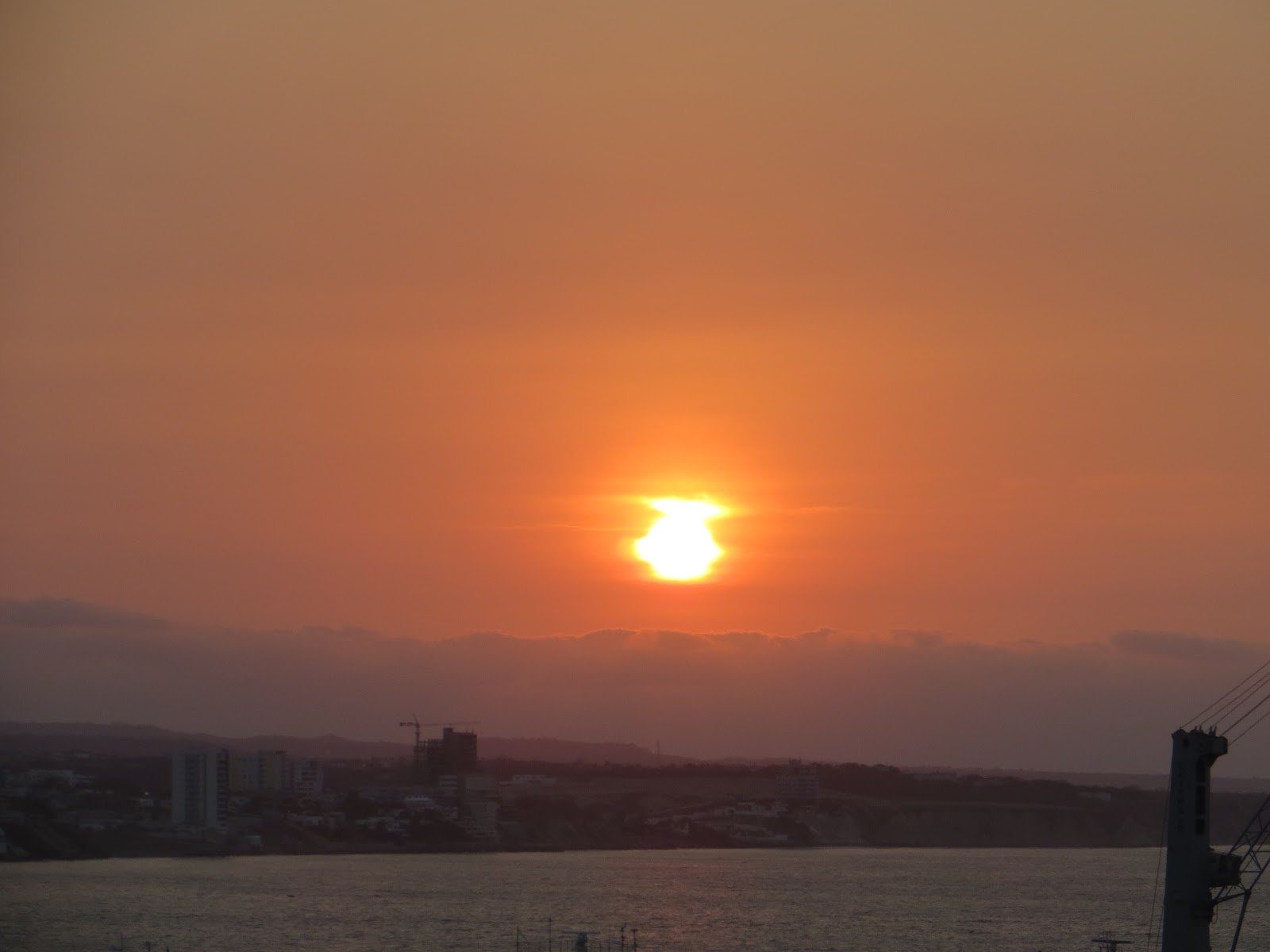
  • Nice, mid-ship, balcony room, starboard with nightly sunsets.

  • Only one flight. I drove to Ft Lauderdale to board the ship and took a single flight home from Santiago, Chile. I used frequent flyer points.

  • Informative naturalist scholars lecturing daily. (Husband and wife team of PhDs.) Even learned what seasickness really is.

  • Got great last minute deal on room.

  • No time change

  • No currency exchange necessary

  • No jet lag

  • Beautiful Indian markets everywhere


  • Christmas decorations everywhere, including on the ship


  • Panama hats (really Ecuador hats)


  • Colorful ports with fishing villages


  • Performed on stage in two group dances. Uploaded them to YouTube:


My dancing videos:

Thriller Dance: http://youtu.be/vTiOO3AsPqM

Incredible Dance: http://youtu.be/fjfGpqgcSlI
  • Ate ceviche in Ecuador and Chile

  • Nice weather—no rain

  • Met nice people; Amy and Franklin, Freda, Inge, Ingrid, and more


      • Participating in the cabin crawl

      • Great shopping in all ports. Beautiful and inexpensive.


      • Took local bus in Coquimbo to La Serena (I don’t recommend this)


      • This is a unique, twice a year sailing: one is southbound (December); the other is northbound (March)
      • Became Elite on Celebrity (in 8 months)